
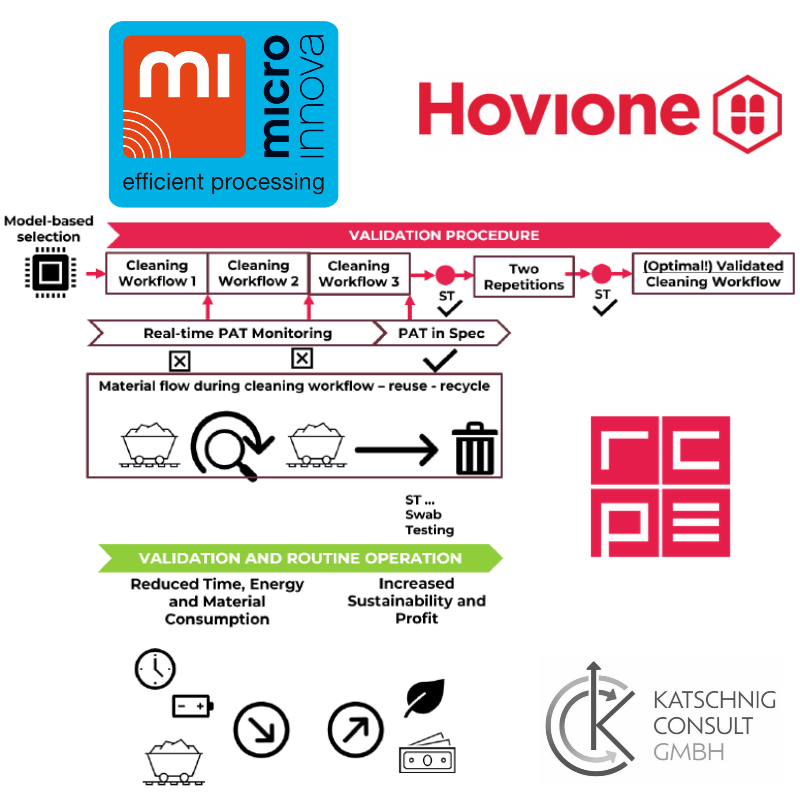
In modern processing industries, modular manufacturing is driving unprecedented flexibility. However, the true value of a multipurpose facility lies in its ability to handle rapid and reliable product changeovers. For the multipurpose use of modular plants, a highly effective cleaning strategy is absolutely crucial. Under the leadership of RCPE and collaborating with global pharma player Hovione, Microinnova is proud to be part of CRISP, a research consortium dedicated to developing innovative tools and frameworks for advanced resource optimization in cleaning operations.
When implementing our FlowKiloLab®, we deliver cutting-edge continuous processing equipment engineered for versatile, multipurpose applications, making seamless cleaning and changeovers top priorities. Through our joint collaboration with academic and industrial partners in the CRISP project, we are exploring the precise methodologies and tools necessary to make cleaning processes as efficient, sustainable, and reliable as the FlowKiloLab® itself.
To achieve these optimized cleaning workflows and ensure regulatory compliance, the project relies on the development of digital tools and real-time measurements across five primary subobjectives:
The successful implementation of these tools will redefine the efficiency of plant changeovers. By leveraging advanced digital frameworks, real-time measurements, and the LCA light methodology, the consortium aims to deliver significant improvements in resource use and overall operational costs. Looking to the future, with development projected over the next 27 months, Microinnova plans to build upon the foundational research of CRISP. While a fully validated cleaning concept for the FlowKiloLab® falls outside the direct scope of the CRISP project, our goal is to leverage these subsequent findings to independently develop and supply a comprehensive cleaning concept alongside our equipment, ultimately maximizing the true potential of multipurpose modular manufacturing.
Um Ihnen ein optimiertes Erlebnis zu bieten, verwenden wir Technologien wie Cookies, um Geräteinformationen zu speichern und/oder darauf zuzugreifen. Wenn Sie diesen Technologien zustimmen, können wir Daten wie das Surfverhalten oder eindeutige IDs auf dieser Website verarbeiten. Wenn Sie Ihre Zustimmung nicht erteilen oder widerrufen, können bestimmte Merkmale und Funktionen beeinträchtigt sein.