
knowledge
base
From fundamental principles to advanced applications in Process Intensification & Continuous Processing, our Knowledge Base is designed to answer your most critical questions. Select a focus area below to discover how Microinnova bridges the gap between complex challenges and practical, scalable solutions.

Most Recent
Overcoming the 5 Biggest Headaches of a Process Equipment Manager: De-Risking with Modular Manufacturing
How do you de-risk your operations? The answer lies in Modular Manufacturing. By decentralizing plant design with standard, skid-mounted process modules, you can neutralize the 5 biggest headaches in process engineering.
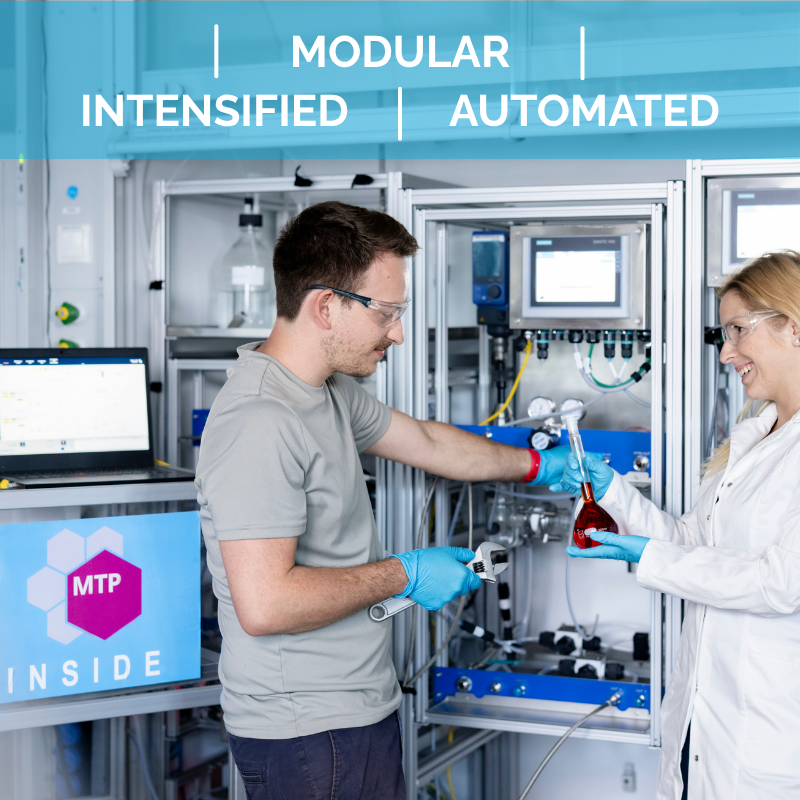
Innovate or Die?: Three Pillars for the Future of Chemical Manufacturing
The chemical and pharmaceutical industries are standing at a critical crossroads. Faced with tightening regulations, shifting markets, and rising costs, relying on legacy batch operations and static infrastructure is no longer a viable long-term strategy. Stagnation means obsolescence. To stay competitive, process engineering must evolve. In our latest article, we explore the three core pillars that are completely transforming the process industry.

Stop Wasting Capital on Fragmented Systems: The ROI of a Dedicated Integrator
In today’s rapidly evolving process industry, innovation is accelerating at the component level, but it is also creating a highly fragmented market. Are siloed equipment and software bottlenecks slowing down your scale-up?

Autonomous Manufacturing Process Plants: Step into Dark Factories for Chemistry & Pharma
The industry is evolving. While traditional processing laid the groundwork, autonomous “Dark Factories” are the next frontier for Pharma & Chem. Maximize efficiency and agility with Microinnova’s modular flow technology.

Advancing Research for Sustainable Aviation Fuel (SAF) Production & E-Fuels
The Microinnova SAF pilot plant is a continuous flow processing facility located at the Technical University of Leoben. Spanning an entire university building, this Europe-wide unique research infrastructure operates at the Chair of Process Engineering for Industrial Environmental Protection. It is specifically built for the research, process development, and optimization of low-carbon aviation fuels.

Maximizing Efficiency: 5 Ways Flow Chemistry Slashes OPEX
Traditional batch manufacturing is often burdened by high Operational Expenditures (OPEX) due to excessive downtime, high energy consumption, and process variability. We overcome these inefficiencies by implementing Continuous Flow Processing combined with advanced automated control. This transition eliminates non-value-added service times and maximizes resource utilization, significantly driving down daily operating costs while ensuring consistent, high-quality production.
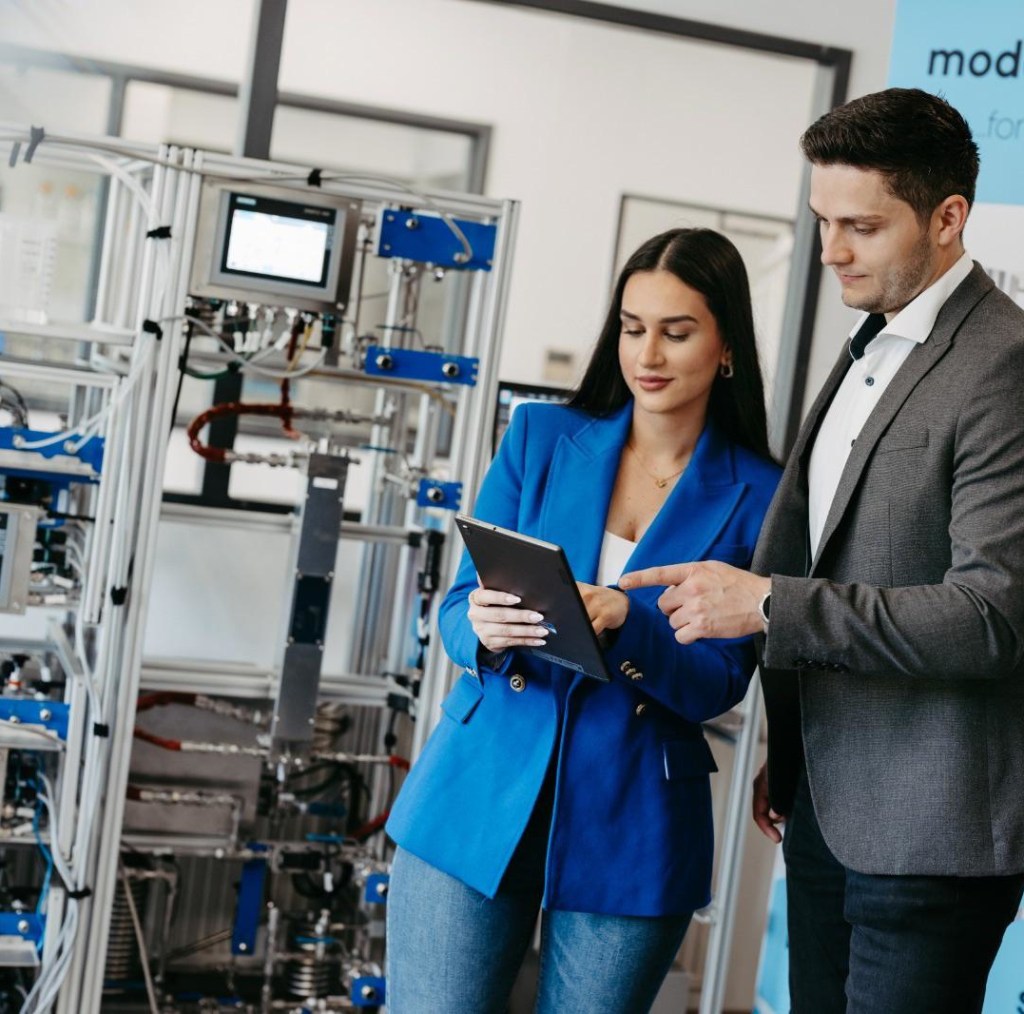
7 Factors of Hidden ROIs: Why Continuous Flow Pays for Itself (Beyond the Sticker Price)
Moving from batch to continuous flow is more than a technical upgrade—it’s a strategic financial decision. While many organizations get stuck on the initial hardware costs, the true value of flow technology lies in the long-term reduction of OPEX and the acceleration of market entry.
This deep dive breaks down the seven critical factors where flow chemistry outperforms traditional batch processing, proving that the highest ROI often comes from the most “hidden” operational efficiencies.

5 Common Challenges in Process Scale-Up & How to Overcome Them
Scale-up frequently fails due to inefficient heat transfer and the loss of “uniform molecular experience” in large batch reactors. We overcome these physical limitations by utilizing Continuous Processing and modular “Plug & Produce” plants. This ensures lab-scale quality is maintained at commercial production volumes without the risks of “first-of-a-kind” engineering.

Modular Flow Chemistry and MTP: Transforming Pharmaceutical Manufacturing for Agility, Safety, and Speed
Traditional batch processing often lacks the flexibility required for personalized medicine and rapid scale-up. We implement Modular Flow Chemistry combined with the MTP (Module Type Package) standard to create “Plug & Produce” environments. This approach decouples hardware from control software, eliminating vendor lock-in and significantly accelerating time-to-market.

Modular API Manufacturing: The “Plug-and-Produce” Approach for Speed & Flexibility
Speed is the decisive factor in pharmaceutical development. We utilize Modular Manufacturing principles to replace rigid plant infrastructure with flexible, “Plug-and-Produce” units. This approach reduces time-to-process by up to 50%, allowing for rapid adaptation to new market demands without the need for ground-up engineering.
Coming up next:
Debunking the “Batch Is Safer” Myth (Safety in Small Volumes)
What Is “Plug & Produce”? A New Era for Plant Construction
Fine Chemicals & Specialties: Costleader & Agility in a Changing Market